Have you been to Venice? Perhaps you’ve ticked off that Gondola ride on your bucket list? Or you’ve never made because you’re put off by the crowds? Venice gets its glory for the region (and rightly so – it’s definitely worth visiting) but we’ll let you in on a little secret: there’s plenty of other spots in the region with just as much history, culture, and beauty on offer. And they have canals too. Enter: Treviso.
The Veneto region has coastal regions and expansive farming land, meaning in-land produce that’s nutrient dense, while coastal products and seafood are harvested freely too. It makes for an interesting cuisine. And with Venice as a port town steeped in history, historical its highly rich status means it’s become a beacon for desserts, cocktails, and seafood. So vegetables might not spring up in the flower beds of your mind when you think of decadence or this region but actually it’s one of the region’s winter jewels.
Radicchio Tardivo is quite a chic vegetable: elegant, elongated in its and almost looks like a flower when it’s trimmed and ready for market. And we hunt for the regal colour growing, on a misty winter morning in Scorzè. We follow Damiano and his friend Giuliano at Azienda Agricola Scattolin to find the purple flower growing.
What we find is that this is no ordinary vegetable. The way it grows is quite majestic. Its story begins in the fields in midsummer, when the plants grow strong and leafy under Venetian sun. But unlike most plants, it adores the colder climes; magic happens in November, when the chill arrives. The cold halts their growth, scorching the outer leaves. That’s when Giuliano harvests the radicchio. He takes the roots, soil clods, and all—and brings it back to the farm for sorting.
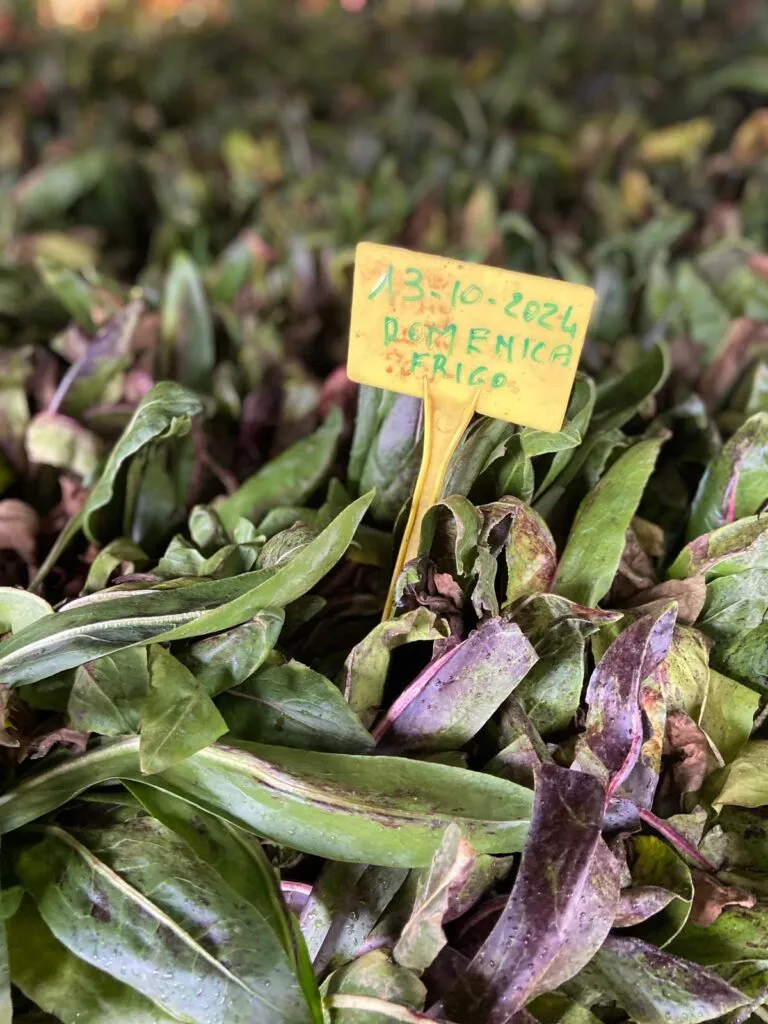
Once there, he places the roots are placed into tanks filled with pure spring water which comes straight from the Dolomites. This water is kept at a constant 13–17°C, so over the next two weeks, the plants quietly transform. In the darkness of the sheds, the sbiancamento (whitening) process begins: the radicchio awakens, sending out new leaves that are tender, red-and-white, and free of bitterness. It’s sort of like a photography development lab, in vegetable form.
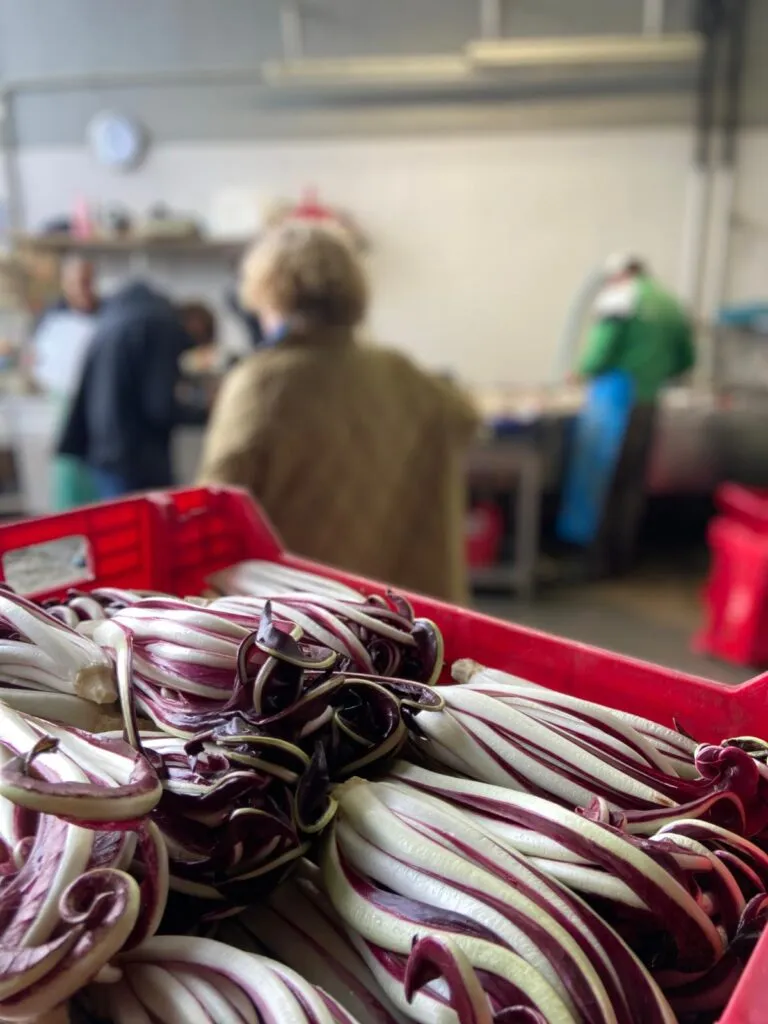
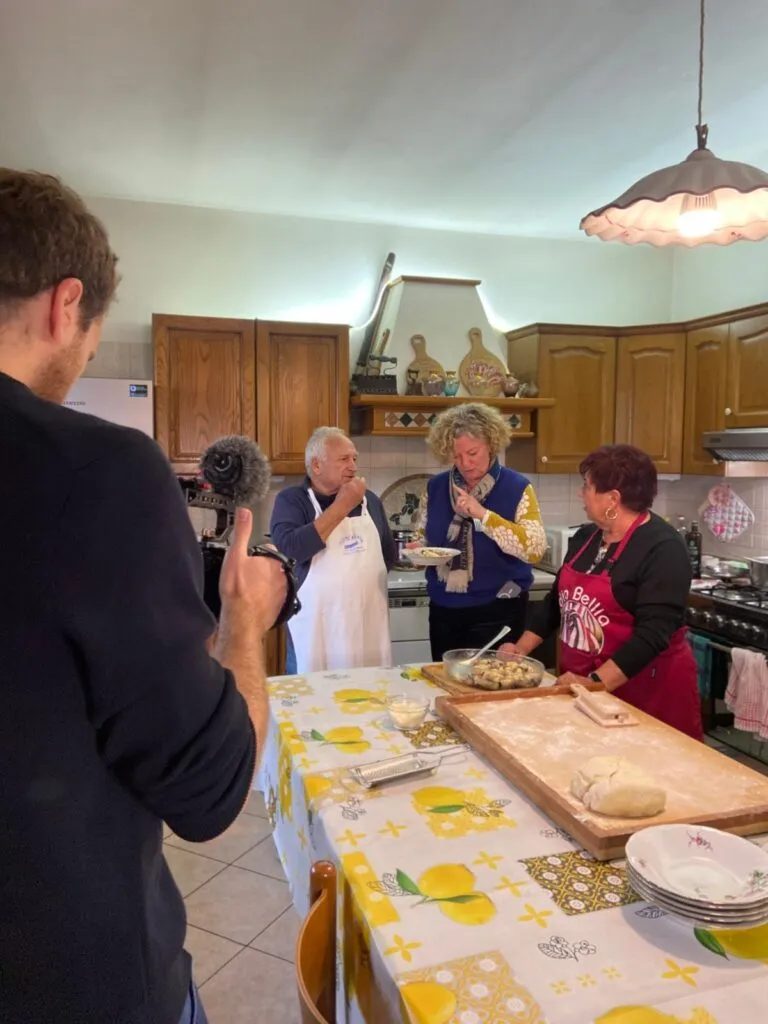
Then once ready, each head is carefully cleaned, trimmed, and prepared in a process called toelettatura. The root is cut to just the right length—never longer than six centimeters—so that the radicchio keeps its freshness. What emerges from Giuliano’s hands looks like a bouquet petals, they’re so pretty it’s tempting not to eat them, but we know just how good they can taste. We cook up a storm with Fabiola and Renata, putting them in a salad with orange and cheese. In case you missed it you can review the recipe here.
And of course, a hard days labour involves rewards. And despite most of team Pasta Grannies not being a huge fan of desserts, we’ll make exceptions when it comes to tiramisu. The Veneto region is the birthplace of this dish, specifically Treviso where we happen to be enjoying ourselves. Le Beccherie is rumoured to be one of the spots that invented it – though, like most things in Italy there is always some hearsay about the real origin and after its popularity spread in the 1970s, everyone wanted in on the action! When we were there, we filmed Mara making the dish. And Livia, our granny finder and resident dessert expert who has tried thousands of spoonfuls of tiramisu over the years (and makes a mean one herself) attests it was one of the best she’s ever had.
How do you feel about tiramisu? Perhaps you like other Italian dessert instead? If so, we recommend trying Livia’s Semifreddo with Apricots.