Concettina’s Greco-Italian Breads
In Zollino is a small town of just 1,800 inhabitants in the province of Lecce — a unique cultural enclave in southern Italy where, until a few decades ago, people still spoke Griko, an ancient Greco-Italian dialect.
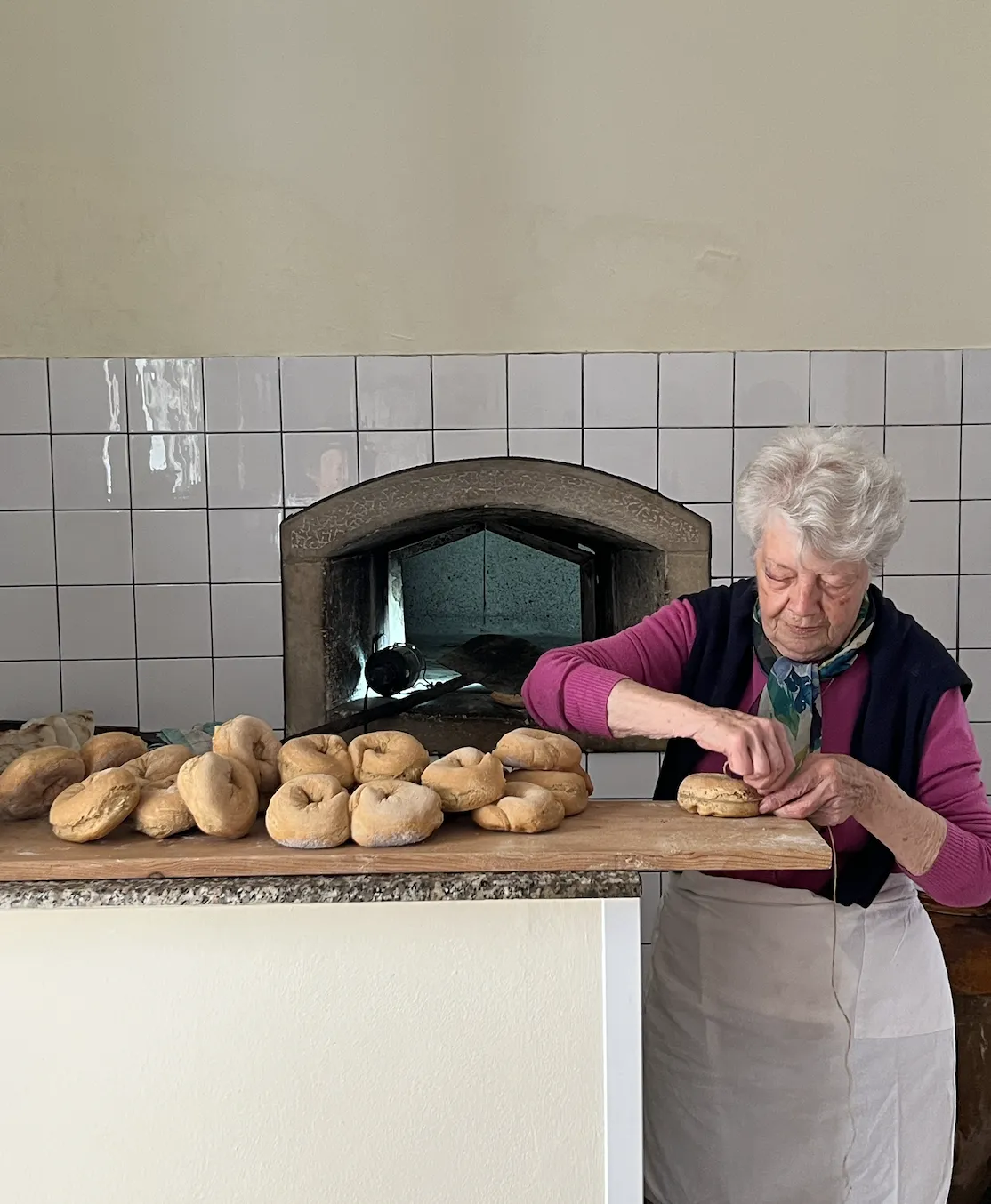
85-year-old Concettina welcomed us into her courtyard to show us how she prepares some of the most traditional breads of this region. Frise, Sceblastim and Pucci. They cook it in a wood-fired oven which she and her husband built with their own hands, fulfilling her lifelong dream of learning the art of bread-making. All three doughs here have similar starting ingredients but the toppings, consistencies and shaping of them is very different.
- 25 minutes
- Easy
- Serves: 4-6
Ingredients
All ingredients are calculated based on 1 kg semolina flour, so you can adapt if you’re wanting to make more
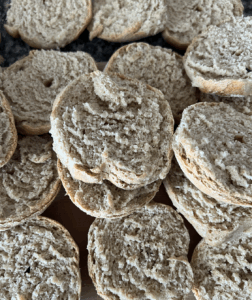
Frise Dough (Friselle)
- 1 kg durum wheat semolina flour
- 6–7 g fresh brewer’s yeast
- 550–600 ml water
- 22 g salt
Sceblàsti Dough
- 1 kg durum wheat semolina flour
- 6–7 g fresh brewer’s yeast
- 750–800 ml water (very soft, slightly spreading dough)
- 20–22 g salt
- Olive oil (added after first rise — quantity depends on desired softness: approx. 80–120 ml)
- Topping (for 8–10 sceblàsti)
- 200 g pumpkin, diced small
- 200 g cherry tomatoes, halved
- 100–150 g black olives, whole with pit
- Salt to taste
- Plenty of olive oil (approx. 60–80 ml per tray
Pucce Dough
- 1 kg durum wheat semolina flour
- 6–7g fresh brewer’s yeast
- 680–720 ml water
- 20–22g salt
Method
All three doughts requires a similar starting point; but the consistency is different. You begin each of these recipes by adding all the different ingredients on to a work surface or into a bowl to mix them together. Make sure to watch the video to check the technique but we’ve also added a couple of notes on the consistency. And some top tips / pointers from Nonna Concettina below.
Pucce
- Should be firm. Add the liquid slowly to make sure you get this right as you don’t want to add too much and make it too soft. The dough must hold shape easily and feel compact.
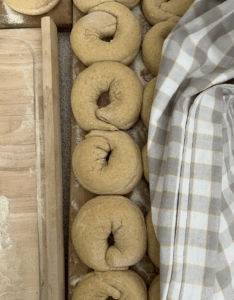
- After baking, frise are cut with string while still warm.
Scleblasti
- Should be very soft and more ‘sticky’ in consistency. If you have a huge bowl, bucket, or large deep dish to mix this in, it should help! Beware: your hands will get mucky!
- Historically this type of bread was baked on to fig leaves, but now modern version make use baking parchment or something else.
- Must be so soft that it spreads slightly when placed on parchment.
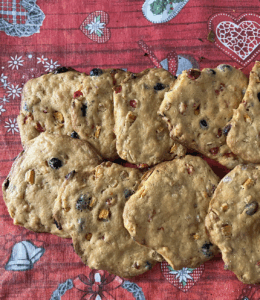
Pucce
- Shape into round buns after an overnight rise.
- Optional add-ins (traditional in Salento):
- Black olives
- Cherry tomatoes
- Capers