Arrival in Piedmont
On our way to Liguria, we passed through Piedmont, which, in our case, meant one thing: stopping as often as possible to film (and a bit of eating ad drinking thrown in too). It seemed like a solid plan.
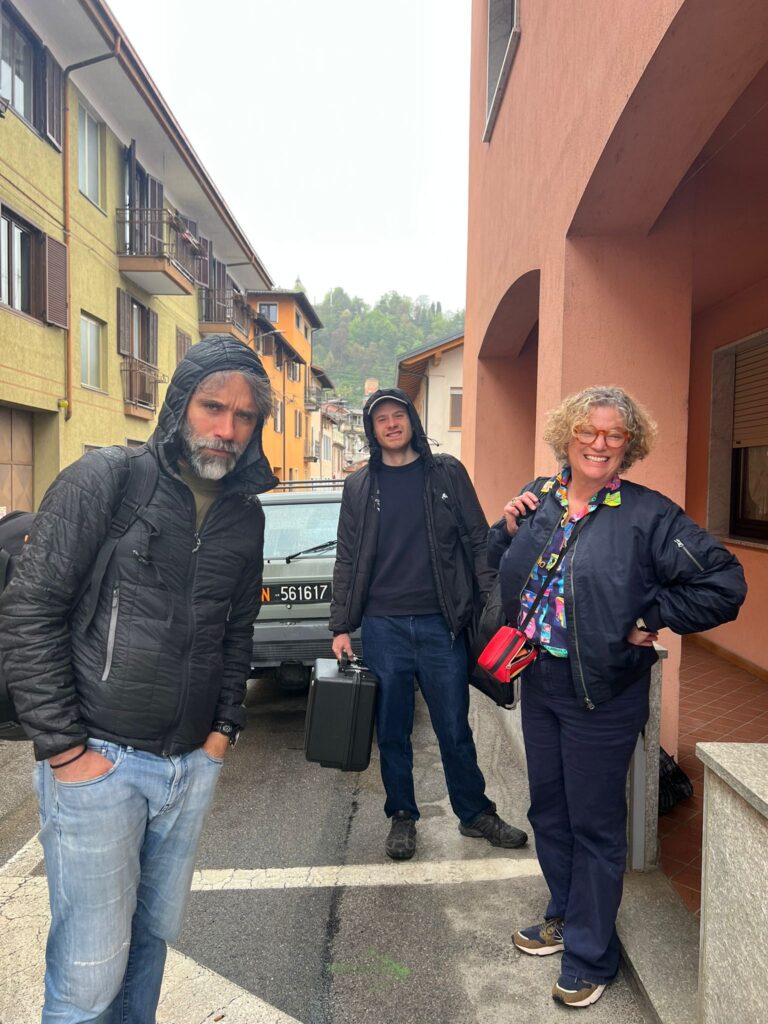
Vicky landed at Malpensa, while Michelangelo arrived from Milan with me (Linda). We met there, exchanged travel updates (mainly about how easy it was to squeeze our bags into the tiny hand-luggage racks and if we got away with our allowances). Once we’d had a bit of whinge, and put on our raincoats (it was pretty miserable), we set off for Alba, where we spent the night doing exactly what Piedmont demands: eating well and opening a very respectable bottle of Nebbiolo.
Birthday Gnocchi and Getting a bit Cheesey
Filming began with Bruna, 78, who welcomed us warmly into her home. It also happened to be her birthday, so before any cooking could begin, there was singing. Not subtle singing, but something of an enthusiastic and slightly off-key chorus.
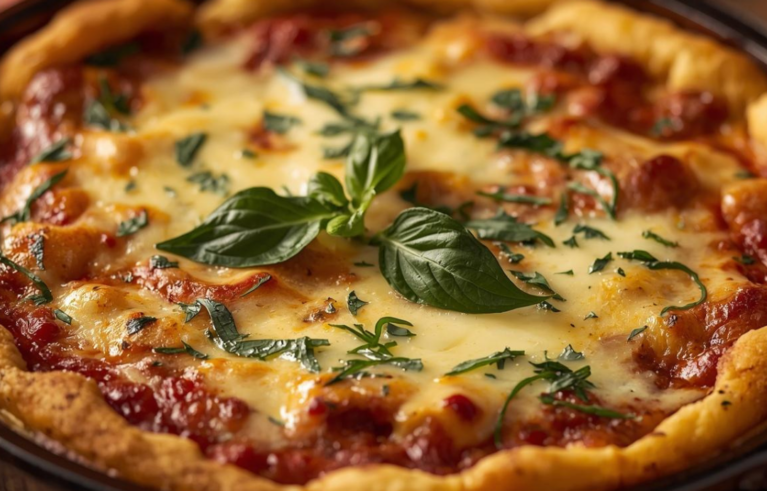
She prepared gnocchi using ciarda potatoes, a local variety which grow here in the hills. And she served them with a Castelmagno sauce; it’s a sauce which absolutely does not believe in taking shortcuts. The cheese melts slowly while mixing with milk, salt, and pepper, and Bruna cooks gently in a bain-marie for about an hour. It is a process that requires patience, but the result is worth every mouthful.
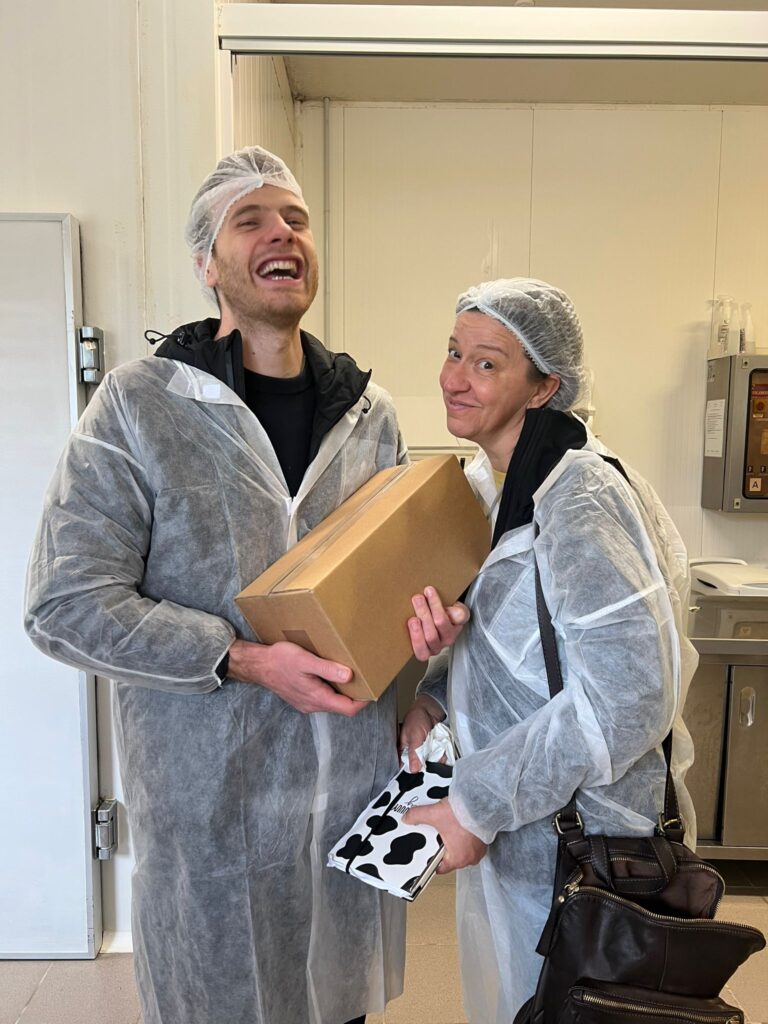
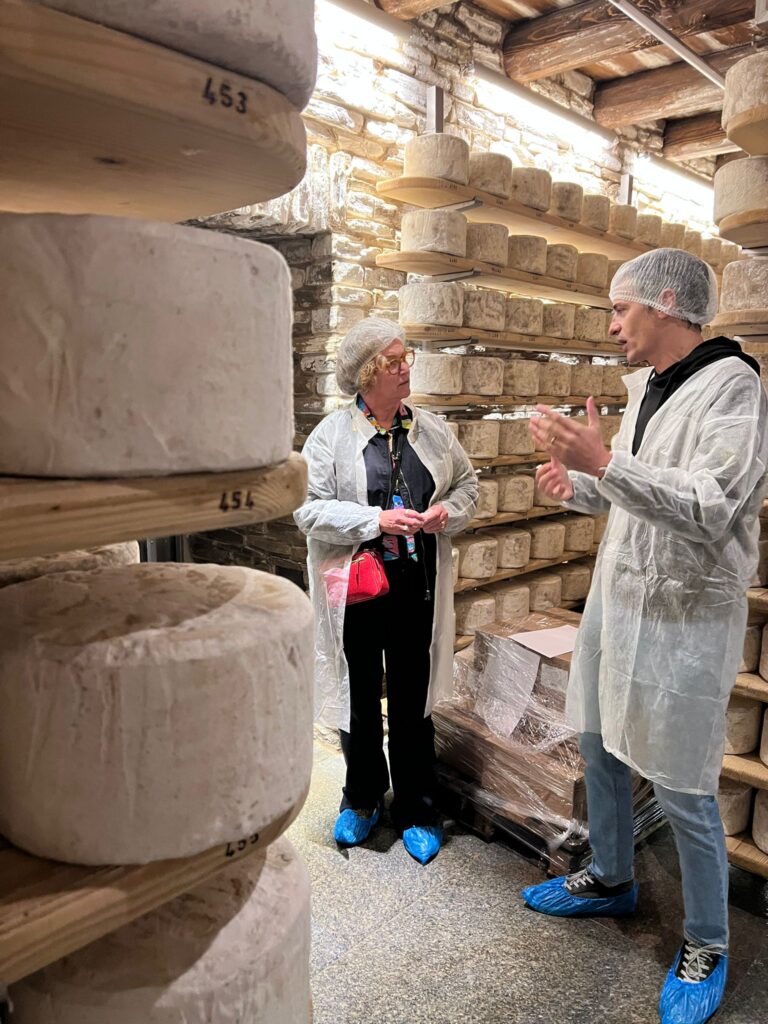
We later visited the La Bruna dairy to see how this Castelmagno is made. Tasting it at different stages of ageing felt like watching a personality develop (and some of those were better than others). It begins mild, and gradually becomes more assertive, until it is very clearly in charge (which one of the cheeses do you think each Pasta Grannies team member would be? We debated that amongst ourselves, while naturally, buying far too much of the stuff (so our luggage developed something of a distinct smelling personality too). Alongside this, we were seen sporting some serious trendy head gear while we were at it. Of course there were photo opportunities too, the phrase isn’t ‘say cheese’ for nothing.
Crouset in a Fortress
Packed with our haul, later that afternoon, we reached Vinadio, near the French border. It was the highest point of our trip Inside a fortress in the Stura Valley, which is exactly as dramatic as it sounds, with snow-capped mountains and many spring blooms on the horizon. Luigina and her sister Marisa prepared Crouset, a pasta that looks a lot like orecchiette, but is a little different.
They also told us a story: Queen Joanna of Anjou is said to have passed through this area as a prisoner, tasted this pasta, and later tried to recreate it in the south, leading to the birth of orecchiette. Whether entirely accurate or not, it is an excellent story, and we listened attentively between devouring mouthfuls of the stuff.
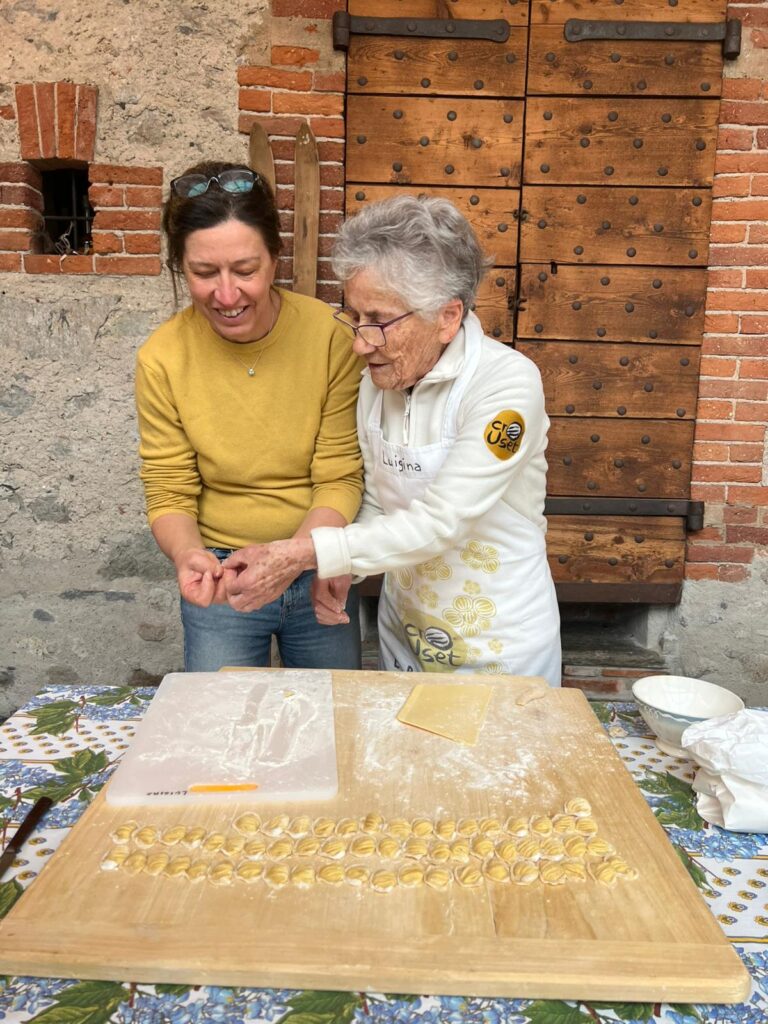
One thing is this: it’s a little more time-consuming versus orecchiette. Crouset must be folded at least seven times. Lucky number seven, maybe? Well we’re not sure, traditionally, this was used to determine whether someone was ready for marriage. A practical and slightly intimidating test which we’re not sure we would have passed in ye olden days, it took us a few attempts to get right.
Ormea and the Beginnings of Cucina Bianca
We then travelled to Ormea, where we stayed for three nights.
Rosetta, 80, prepared a local dish called lasagna, though not the layered kind most people expect. This version is made from flour and water, rolled thin and cut into irregular pieces. Simple, direct, and very effective.
This was our introduction to cucina bianca, or “white cuisine.” The name reflects both the colour and the philosophy: dishes built from what could be grown or gathered locally in the Ligurian Alps. Leeks, potatoes, cheeses, and wild herbs take centre stage.
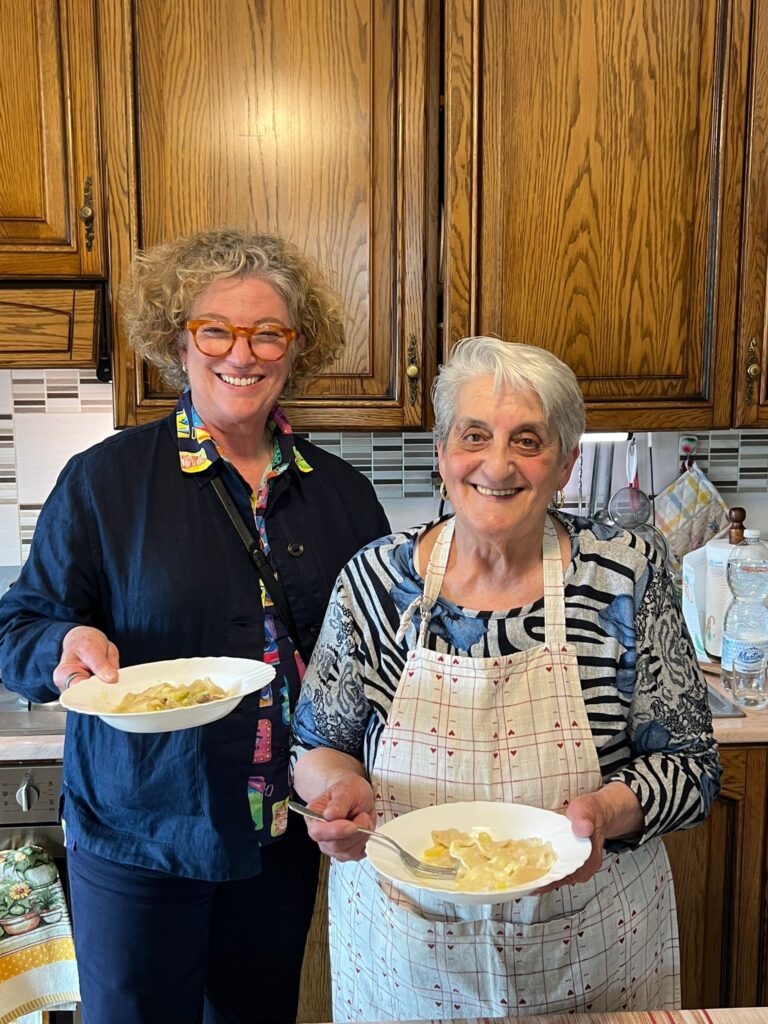
Rosetta served the pasta with a fondue made from mountain cheeses and potatoes, alongside another sauce with porcini mushrooms, leeks, and, inevitably, more potatoes. By this point, potatoes were clearly running the show.
Turle, Wild Herbs, and Mountain Life
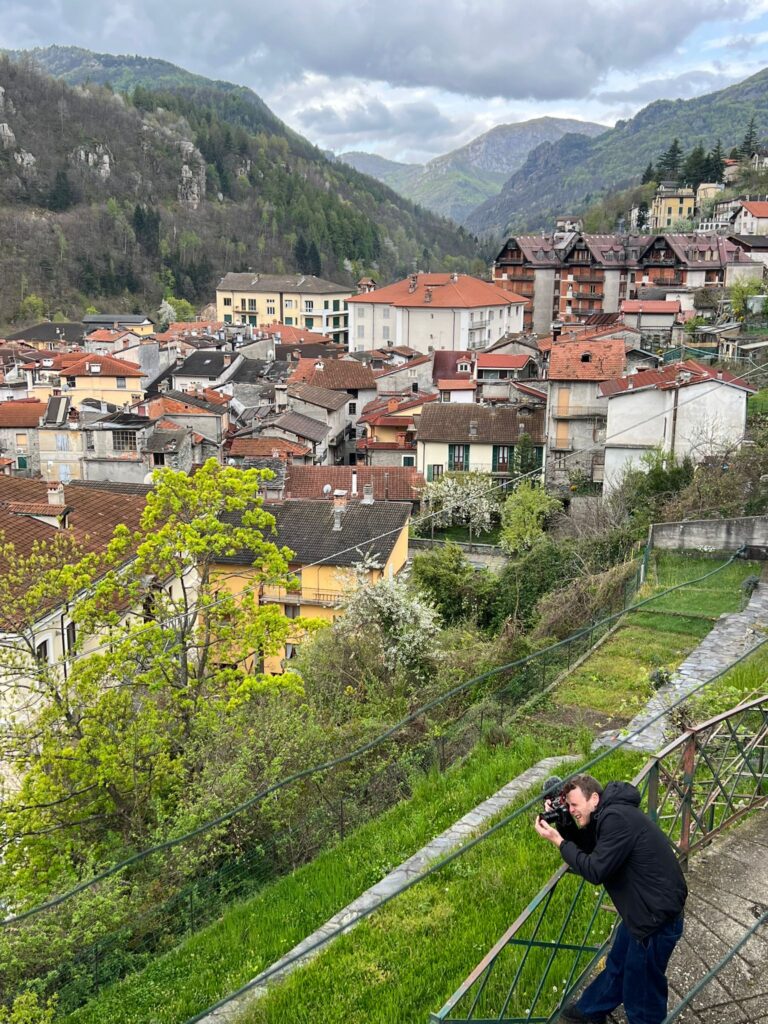
That afternoon, we crossed into Liguria and reached Cosio d’Arroscia.
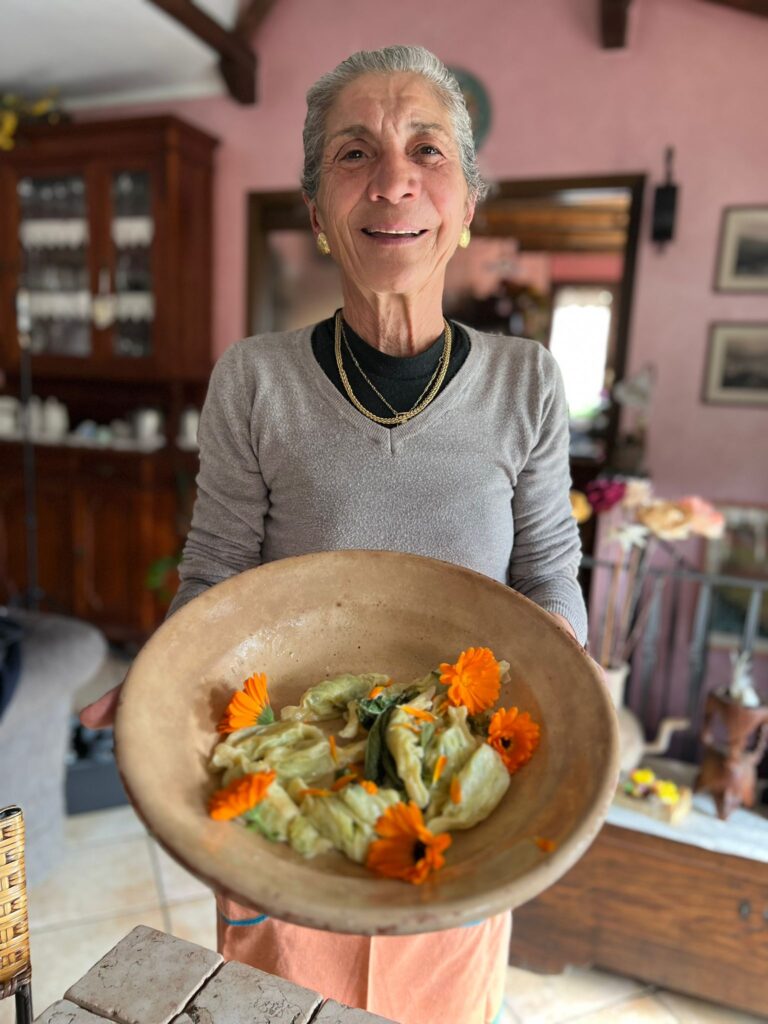
Here, Floriana prepared Turle, a ravioli style found only in this village! The filling combines leeks and potatoes with marjoram and wild mint, and they’re served with butter, sage, and local wild flowers called calendule. Yes, flowers, and yes, they not only look beautiful, but you can eat them too!
Cosio sits high on a mountaintop and feels pleasantly removed from everything else. Nearby villages like Mendatica and Montegrosso Pian Latte are connected, but life here revolves around the locality of the ingredients.
Later, Mariella introduced us to Raiöre, which were small pastries filled with an impressive mix of wild herbs, sometimes up to thirty. At that point, we stopped trying to count and focused on eating them instead.
Foraging and Cooking in Montegrosso Pian Latte
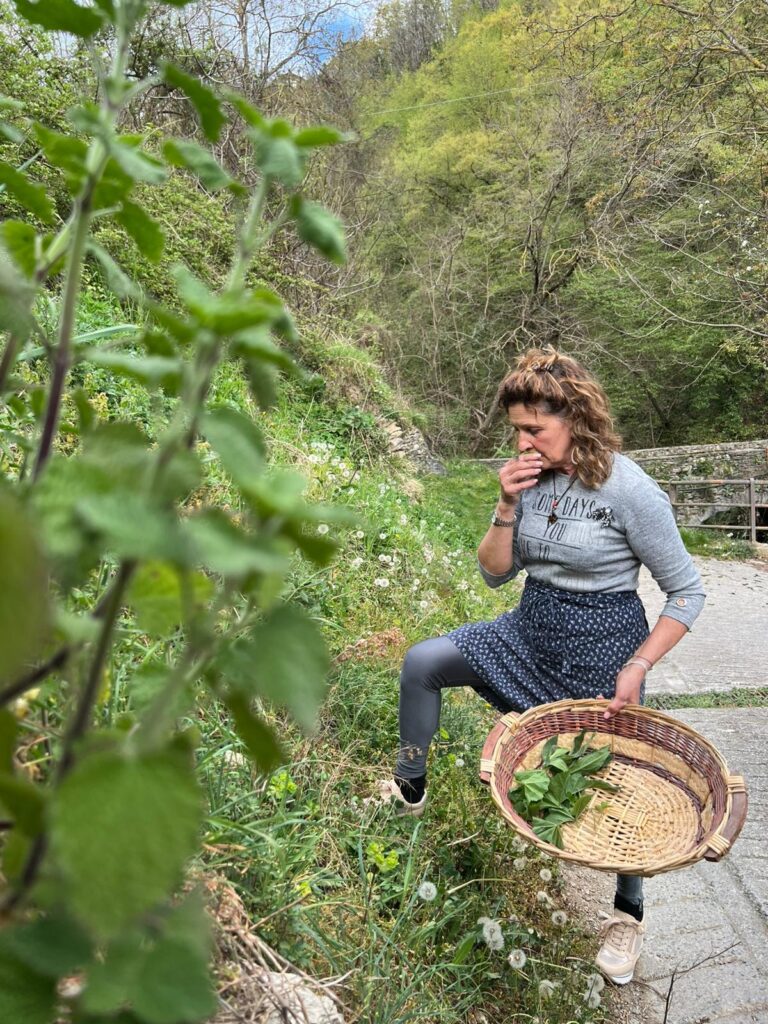
The following day, in Montegrosso Pian Latte, we cooked with Teresa. She gathered wild herbs before preparing another type of ravioli, this time filled with at least thirteen varieties of the products of her green fingers.
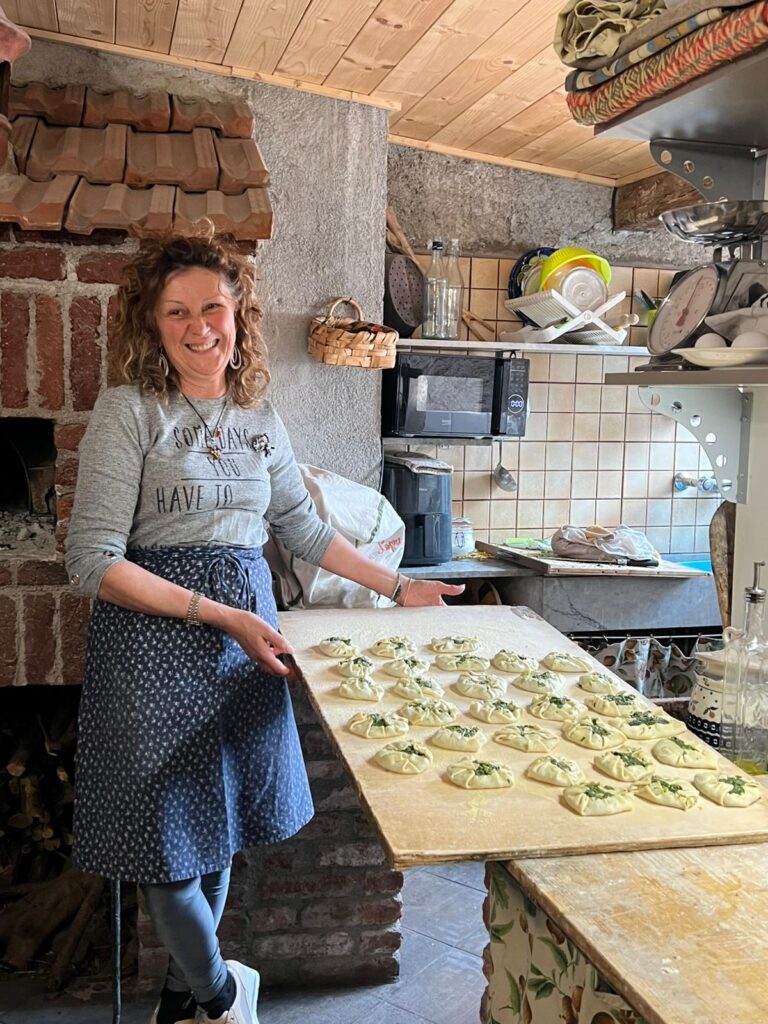
The village has around eighty inhabitants, and everyone seems to know everyone else. It is the kind of place where village gossip thrives, and any newcomer doesn’t go unnoticed, especially the ones carrying cameras and a growing collection of cheese.
Garlic, Trofie, and Coastal Air
On the afternoon, we headed towards the sea, arriving in Vessalico, a village famous for its garlic.
Here we learned that the stony, potassium-rich soil produces garlic that is easy to digest, full of flavour, and notably free of a central core. It is, in many ways, overachieving garlic.
Olga, 85, and her neighbour Milena, 79, prepared trofie for us. Though originally from the Genoa area, it is widely made here. They served it with pesto, bringing together basil, cheeses, pine nuts, and the local garlic in a way that made complete sense.
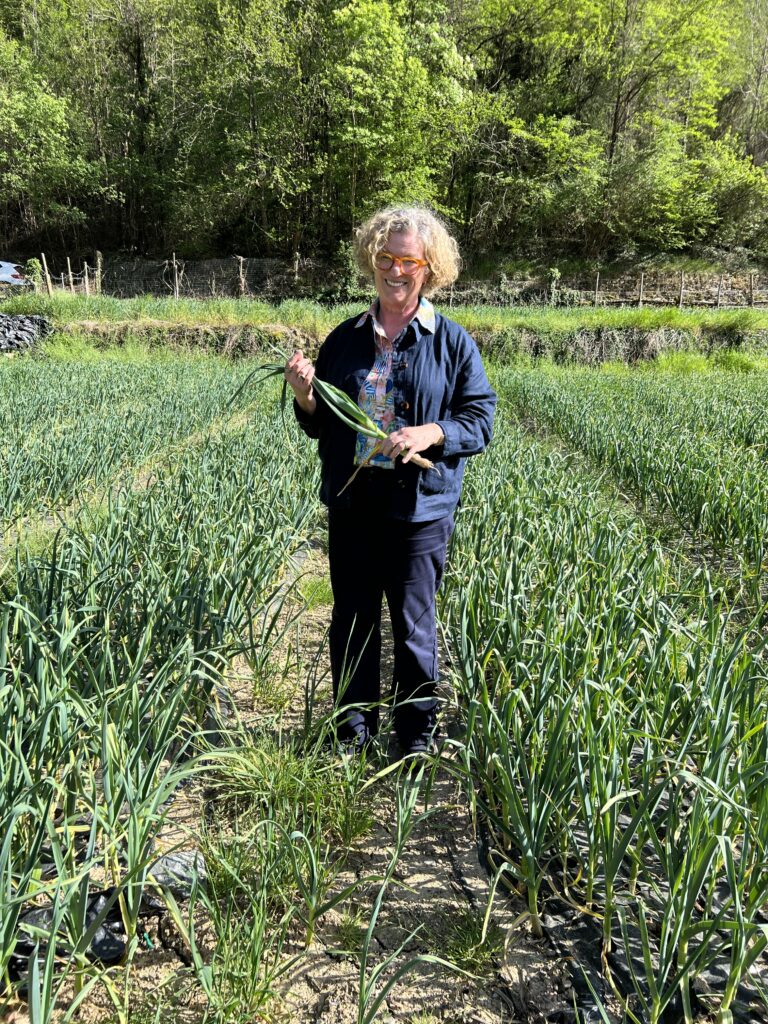
We also visited a garlic field, still growing and quietly preparing for its harvest at the end of June.
Sugeli and a Gardens of Stories
Then, we visited Teresa, 92, in Pompeiana, near Imperia. She spent most of her life in Verdeggia, an area known for mountain cheese production, where a pasta called Sugeli is traditionally made.
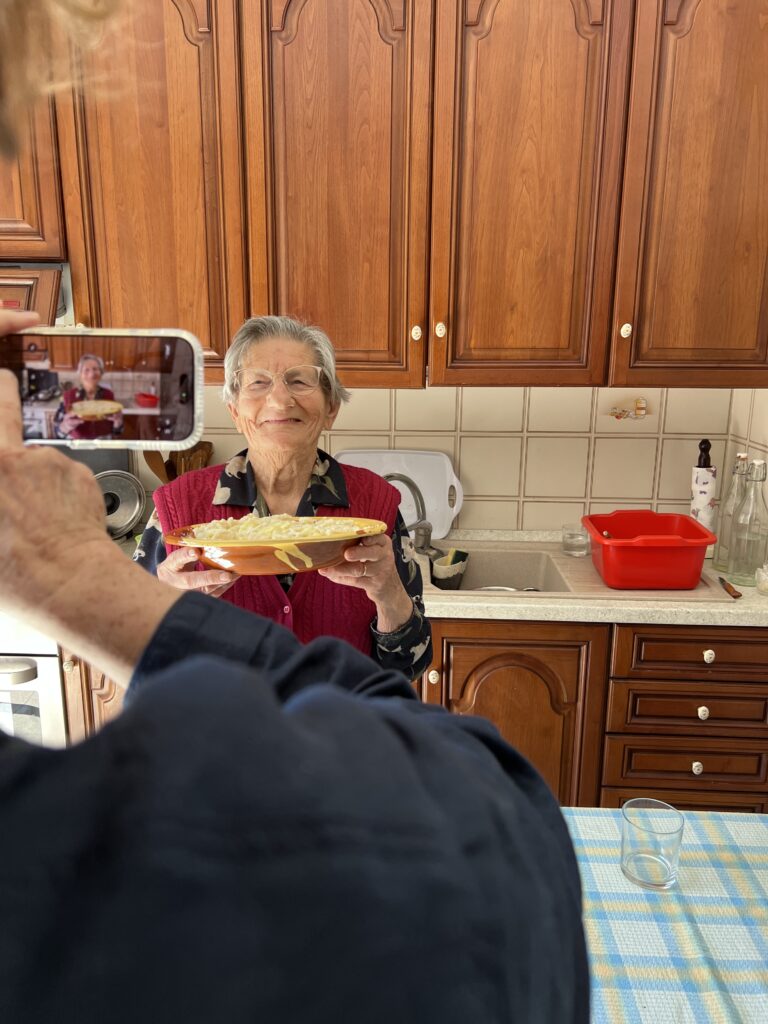
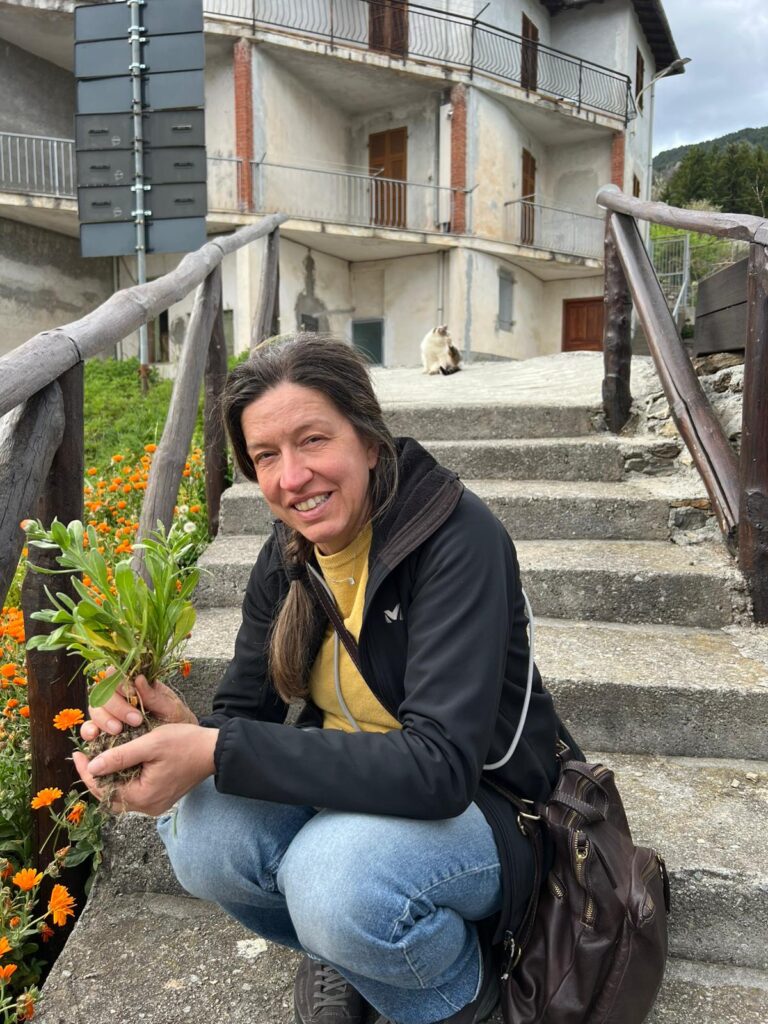
She continues to prepare it today, shaping it much like orecchiette and serving it with bruss and potatoes. She also showed us her garden, filled with plants she has grown over the years. Having worked in greenhouse cultivation, especially with carnations, she still tends them with great care. And Livia, our resident gardener, made sure to leave with a couple of clippings too!
Focaccia at Sunset
Later, we travelled along the coast to Borgata Oveto, a small hamlet near Villa Faraldi with only about fifteen residents.
There, Aldo, 74, prepared Pissalandrea, a focaccia similar in dough to Genoese fugassa but topped with tomatoes, onions, anchovies, and olives, reflecting French influences from nearby Nice.
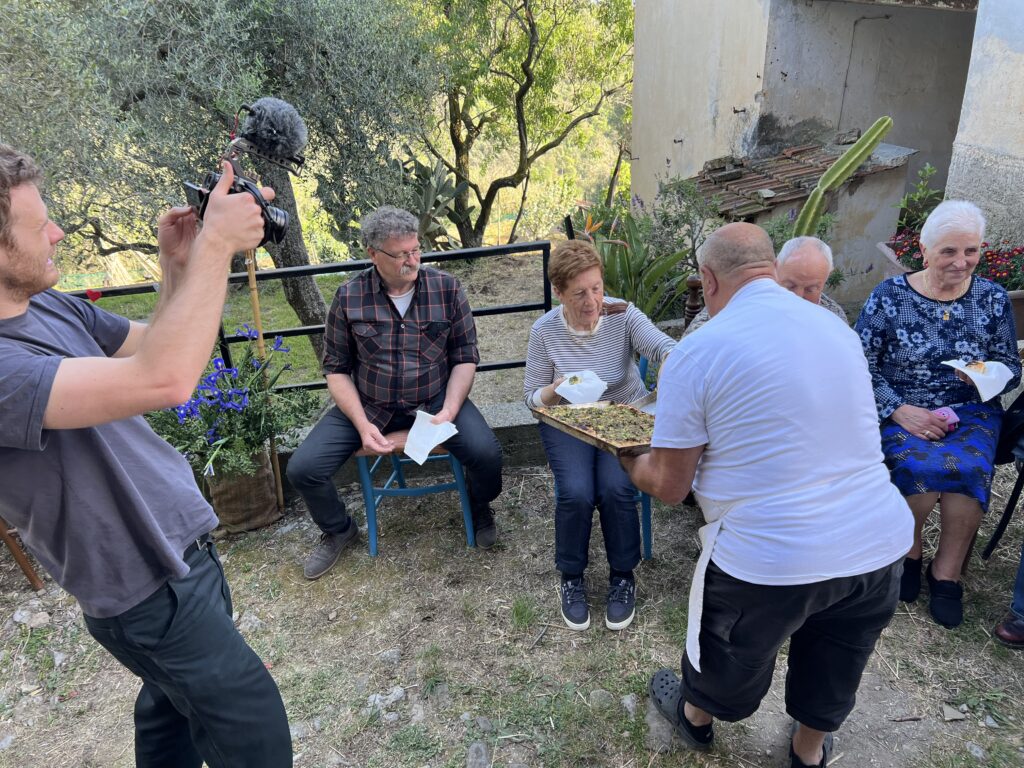
Aldo and his wife Luigina gathered everyone outside their tavern, where we shared the freshly baked focaccia as the sun set among the olive trees. There was also focaccia verde, filled with chard, egg, and cheese, and we tried all the variations because one focaccia is never enough for us (even after a day’s pasta filming).
Taggia and the Final Stretch
On the morning, we travelled along the Riviera dei Fiori, lined with greenhouses used for floriculture, and reached Taggia, known for its Taggiasca olives and olive oil.
Franca and Rosetta, neighbours for seventy years, welcomed us. They cook together often and share a passion for plants, especially pelargoniums, which they proudly grow and exchange.
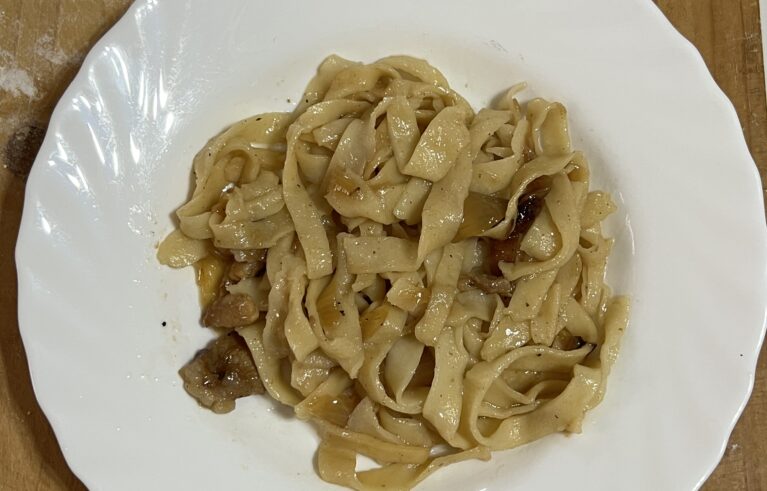
They prepared taggiai(n), a pasta similar to tagliatelle, served with pine nuts, olives, and dried tomatoes. They also added olive pâté to the dough, creating a thinner and more flavourful version. It was super unique.
Liked this? Why not see what else we’ve been up to on our travels. For more longer reads from diaries entries, and off-the-beaten-track tips, visit our blog.