Anna & Bruno’s Tuscan Stew with Polenta
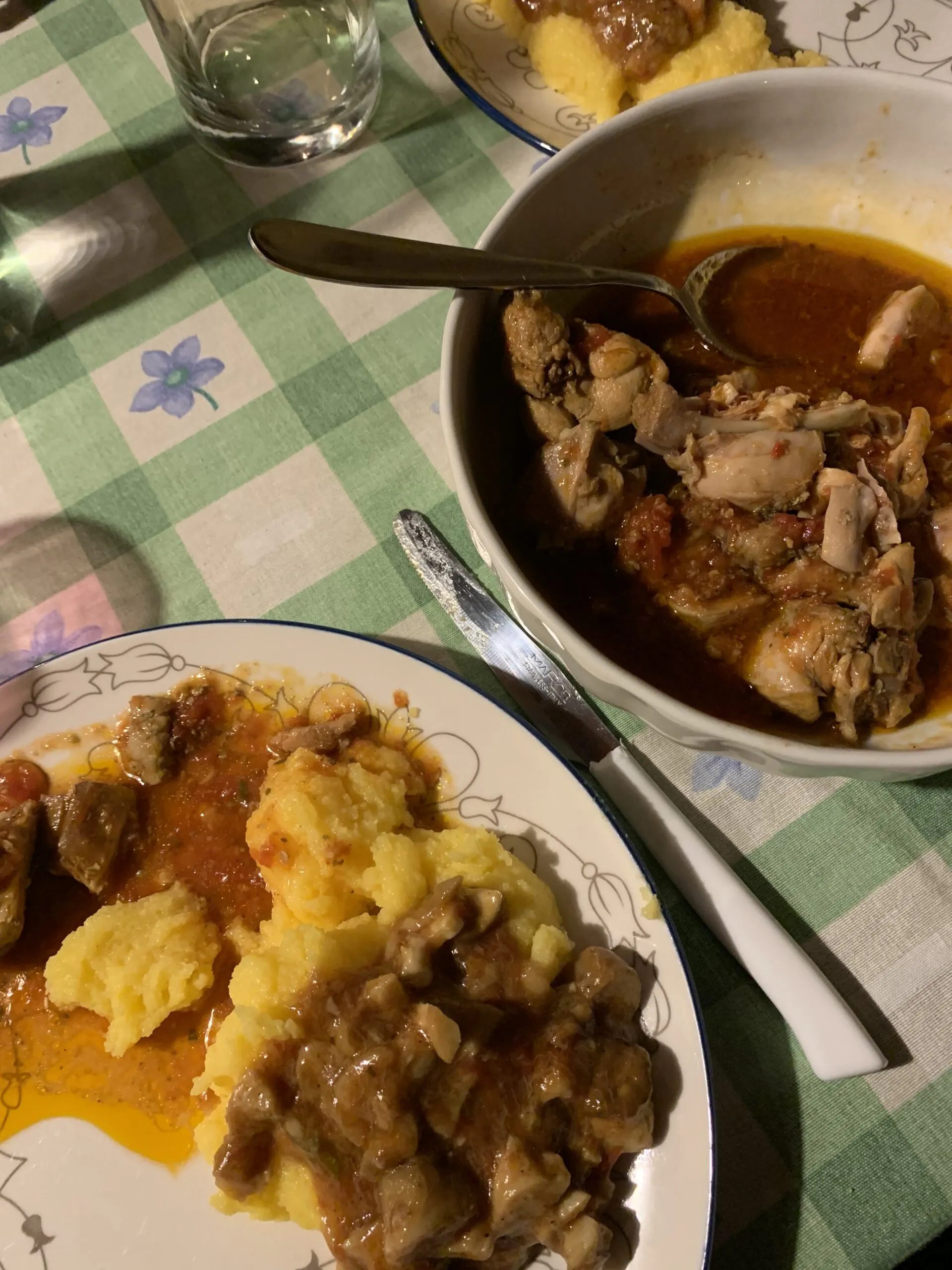
Anna and Bruno are Michaella’s neighbours in her family’s village in Tuscany. While there recently they invited her over for dinner and made a delicious rabbit stew. As is tradition, she took note and recorded this special dish but has since rabbit isn’t always the easiest ingredient to locate in her local London supermarkets she’s trialled it with both chicken thighs and mushrooms.
Anna and Bruno are quite the husband and wife team with her signature stew piano piano piano piano technique results in tender meat and well-reduced flavours, while Bruno is the polenta master; he even cuts it with a special curved stick saved specially for polenta nights. He lets it rest until nearly solid and then separating it into small rounds for serving. If you’e trying this at home we recommend employing someone as your polenta-master; but curved rustic sticks might hard to come by so a large serving spoon will do the trick, we reckon. If you’re entertaining, it’s a great one to prepare in advance; the stew is even better the next day, once the flavours merge together and strengthen overnight.
Our recommendation on how to eat it?— piano piano — just so that you can savour the taste.
- 3 hours
- Easy
- Serves: 6
Ingredients
For the stew
- 1.5 kg rabbit, cut into pieces (chicken thighs work beautifully too; for a vegetarian version, use around 800 g mixed mushrooms)
- 4 tbsp olive oil
- 4 cloves garlic, finely chopped
- 2 tbsp fresh sage leaves, chopped
- 1 tbsp fresh thyme or lemon thyme
- 1 tbsp oregano or verbena (optional if available)
- 2 stock cubes (vegetable or chicken — Anna swears by Dado)
- 800 ml water (or light stock)
- Salt and freshly ground black pepper, to taste
For the polenta
- 1.2 litres water
- 300 g polenta (coarse cornmeal)
- 50 g butter (optional)
- 60 g grated Parmesan cheese (optional, for extra creaminess)
- 100 ml milk or cream (optional, for a softer texture)
- Salt, to taste
Method
Anna’s Stew
- Once you’ve prepared the rabbit — or chicken, or even mushrooms if you fancy something meatless — place it in a large, heavy pot.
- Add the olive oil, chopped garlic, and a generous handful of sage. Anna uses nepetella, a fragrant mountain herb, but thyme (especially lemon thyme), oregano, or verbena work just as well. She always says it’s better to use more than one herb if you can.
- Set the pot over a gentle heat and sauté everything piano piano — slowly, slowly, as Anna loves to say. Let the meat brown softly, turning occasionally, until it’s golden and fragrant.
- Crumble in the stock cubes and pour over the water. Add a pinch of salt and pepper, stir, and then lower the heat. You don’t boil this — you simmer. Slowly, slowly, slowly, slowly, for at least two hours. The sauce thickens, the meat softens, and the herbs melt into something comforting and rustic. Taste and season as you go.
Bruno’s Polenta
Polenta is Bruno’s domain. When asked for his recipe, he laughs — “facile facile,” he says, “easy, easy.”
- Bring 1.2 litres of salted water to a gentle simmer in a heavy pot. Slowly pour in the polenta flour, stirring all the while to keep it smooth. It thickens gradually, transforming into a rich, golden mass — like a grainy, savoury custard.
- Be patient: the cornmeal sets quickly, so add it slowly and keep stirring. After about 20 minutes, it will start to become thick, soft, so your final 10-15 minutes are crucial watching time. Don’t panic if you mess it up though, you can always save it by whisking in a splash of hot water or milk to loosen. I like to stir in a few handfuls of grated Parmesan or a splash of milk to make it extra creamy. So if you’re feeling decadent you can do that too.
Final Touches
- Spoon the warm polenta onto plates and ladle the stew over the top.
- A drizzle of olive oil and a few fresh herbs will make a lovely finishing touch.
Get to know our Nonnas
- 30 minutes
- Easy
- Serves: 4
Enjoying these videos? Discover more content from the Pasta Grannies Club
Free
- 3 hrs
- Medium
- Serves: 6
Enjoying these videos? Discover more content from the Pasta Grannies Club
Free
- 55 mins
- Easy
- Serves: 3-4
Enjoying these videos? Discover more content from the Pasta Grannies Club
Free

- 30 mins
- Easy
- Serves: 4
Enjoying these videos? Discover more content from the Pasta Grannies Club
Free
- 45 mins
- Easy
- Serves: 4